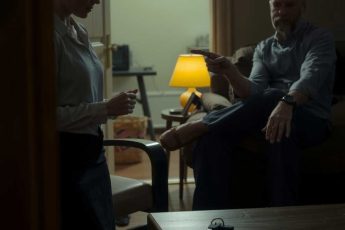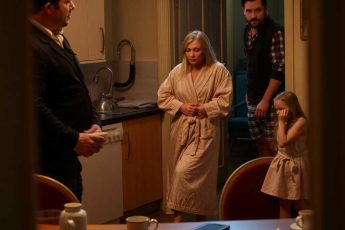
“Theres someone over there,” whispered Emily softly, directing the faint beam of her torch beneath the bridge.
The cold seeped into her bones, and the autumn mud clung to the soles of her wellies, making each step harder. After an exhausting twelve-hour shift at the clinic, her legs ached, but the faint sounda quiet whimper in the darkdrove all other thoughts from her mind.
She carefully descended the slippery slope, gripping the wet stones for balance. The light fell on a small figure huddled against a concrete pillar. Barefoot and dressed only in a thin, soaked shirt, the child was covered in grime.
“Oh, good Lord” Emily rushed forward.
The child didnt react to the light. His eyesclouded and vacantseemed to look right through her. She moved her hand gently in front of his face, but his pupils didnt flicker.
“Hes blind,” she murmured, her heart tightening.
Emily took off her coat, wrapped it around the boy, and held him close. His body was icy.
The local constable, Thomas Whittaker, arrived an hour later. He inspected the area, jotted notes in his pad, then shook his head.
“Likely abandoned. Someone mustve brought him out here and left him. Happens too often these days. Youre still young, love. Tomorrow, well take him to the childrens home in the county.”
“No,” Emily said firmly, holding the boy tighter. “I wont leave him. Hes coming home with me.”
At home, she filled an old basin with warm water and gently washed the dirt away. She wrapped him in a soft floral sheetthe one her mother had kept “just in case.” The child barely ate and didnt speak, but when Emily tucked him in beside her, he suddenly gripped her finger with his tiny hand and didnt let go all night.
The next morning, her mother appeared at the door. Seeing the sleeping child, she stiffened.
“Do you realise what youve done?” she whispered, careful not to wake him. “Youre barely grown yourself! Twenty, no husband, no proper income!”
“Mum,” Emily interrupted softly but firmly. “This is my choice. And I wont change it.”
“Oh, Emily” Her mother sighed. “What if his parents come back?”
“After this?” Emily shook her head. “Let them try.”
Her mother left, slamming the door. But that evening, her father, without a word, left a wooden rocking horse on the doorstepone hed carved himself. He said quietly,
“Tomorrow, Ill bring potatoes. And some milk.”
It was his way of saying: Im with you.
The first days were the hardest. The boy stayed silent, ate little, flinched at loud noises. But after a week, he learned to find her hand in the dark, and when Emily sang him a lullaby, the first smile touched his face.
“Ill call you Charlie,” she decided one day after bathing him. “How do you like that? Charlie”
The boy didnt answer but reached for her, leaning closer.
Word spread quickly through the village. Some pitied her, others judged, and some were simply baffled. But Emily paid no mind. Her world now revolved around one small personthe one shed promised warmth, home, and love. And for that, shed do anything.
A month passed. Charlie began smiling at the sound of her footsteps. He learned to hold a spoon, and when Emily hung the washing, hed “help”feeling for pegs in the basket and handing them to her.
One morning, as usual, she sat by his bed. Suddenly, he reached up, touched her cheek, and said softly but clearly:
“Mummy.”
Emily froze. Her heart stopped, then pounded so hard she couldnt breathe. She cupped his small hands in hers and whispered,
“Yes, sweetheart. Im here. And I always will be.”
That night, she barely sleptsitting by his bed, stroking his hair, listening to his steady breaths. In the morning, her father appeared at the door.
“I know someone at the council,” he said, twisting his cap in his hands. “Well sort guardianship. Dont worry.”
Only then did Emily finally crynot from sadness, but from a happiness so vast it filled her heart.
A sunbeam slid across Charlies cheek. He didnt blink but smiledhearing someone enter the room.
“Mummy, youre here,” he said confidently, reaching toward her voice.
Four years passed. Charlie was seven; Emily, twenty-four. He knew their home by heartevery step, every creaky floorboard. He moved with ease, as if seeing not with his eyes but with his mind.
“Whiskers is on the porch,” he said one day, pouring water from the jug. “Her steps are like rustling grass.”
The ginger tabby had become his shadow, seeming to understand he was different and never leaving his side when he reached for her paw.
“Clever lad,” Emily kissed his forehead. “Today, someones coming to help you even more.”
That someone was Mr. Dawsona retired teacher whod moved in with his sister. The village called him “the bookish oddball,” but Emily saw the kindness Charlie needed.
“Good afternoon,” Mr. Dawson said gently as he entered.
Charlie, usually wary of strangers, suddenly reached out: “Hello. Your voice its like honey.”
The teacher crouched to his level.
“Youve the ears of a musician,” he replied, pulling a braille book from his bag. “This is for you.”
Charlie ran his fingers over the raised dotsand grinned wider than ever:
“These are letters? I can feel them!”
From then on, Mr. Dawson visited daily. He taught Charlie to read with his fingers, write his thoughts, and listen to the world differentlyto hear the wind, know scents, and sense moods in voices.
“He hears words like others hear music,” Mr. Dawson told Emily one evening. “His mind works like a poets.”
Charlie often spoke of his dreams:
“In my dreams, sounds have colours. Reds are loud, blues are softlike you, Mummy, when you think at night. Greens are when Whiskers is near.”
He loved sitting by the hearth, listening to the crackling logs:
“The fire talks when its warm. When its cold, it stays quiet.”
Sometimes, his insights stunned them:
“Today, youre orange. Warm. Grandpa was grey-blue yesterdaythat means he was sad.”
Life settled. The garden provided, her parents helped, and on Sundays, Emily baked a pie Charlie called “the little sun in the oven.” He gathered herbs by scent, predicted rain before the first drop, and said things like,
“The skys about to bend down and cry.”
Villagers pitied him:
“Poor lad. In the city, hed be in a special school. Mightve made something of himself.”
But Emily and Charlie disagreed. And when a neighbour urged her to “send him where hell learn proper,” Charlie said firmly:
“There, I cant hear the brook. Cant smell the apple trees. Herethis is where I live.”
Mr. Dawson recorded his stories. One day, he read them at the county librarys storytelling hour.
The room fell silent. Some cried. Others stared out the windows, as if hearing something important for the first time.
After, Mr. Dawson told Emily:
“Hes not just a blind boy. He sees the world inwardlythe way weve forgotten to.”
No one suggested sending Charlie away again. Instead, children came to hear his tales. The parish council even funded braille books.
Charlie stopped being “the blind boy”he became the one with a unique way of seeing.
“Today, the skys humming,” he said, facing the sun at thirteen, taller now, his summer-bleached hair and deep voice setting him apart.
Emily was thirty. Time had left only fine lines by her eyeswhere smiles often lived. And she smiled often now. Because she knew: her life had meaning. A great one.
“Lets go to the garden,” Charlie suggested, taking his cane. He rarely needed it at homethe yard was as familiar as his own hands. But in town or the woods, it helped.
By the gate, he paused, alert:
“Someones here. A man. Heavy steps, but not old.”
Emily stilled, listening. Sure enough, footsteps approached.
A minute later, a stranger rounded the corner. Tall, broad-shouldered, with sun-weathered skin and clear eyes.
“Afternoon,” he said, touching his brow as if tipping a hat. “Names James. Here to fix the grain elevator.”
“Hello,” Emily wiped her hands on her apron. “Youve found us, then?”
“Aye,” he smiled. “Heard I might rent a room here while I work.”
Suddenly, Charlie stepped forward and held out his hand:
“Your voice its like an old guitar. Warm, a bit dusty, but kind.”
James blinked, then shook his hand