*Diary Entry*
When Emily tugged at the string tied around the sack, the fabric loosened slowly, rustling faintly. For a moment, it seemed as though the scent of dust, old linen, and something faintly sweetlike a half-forgotten childhood memorydrifted out. The women instinctively leaned in, as if drawn to see yet hesitant all the same.
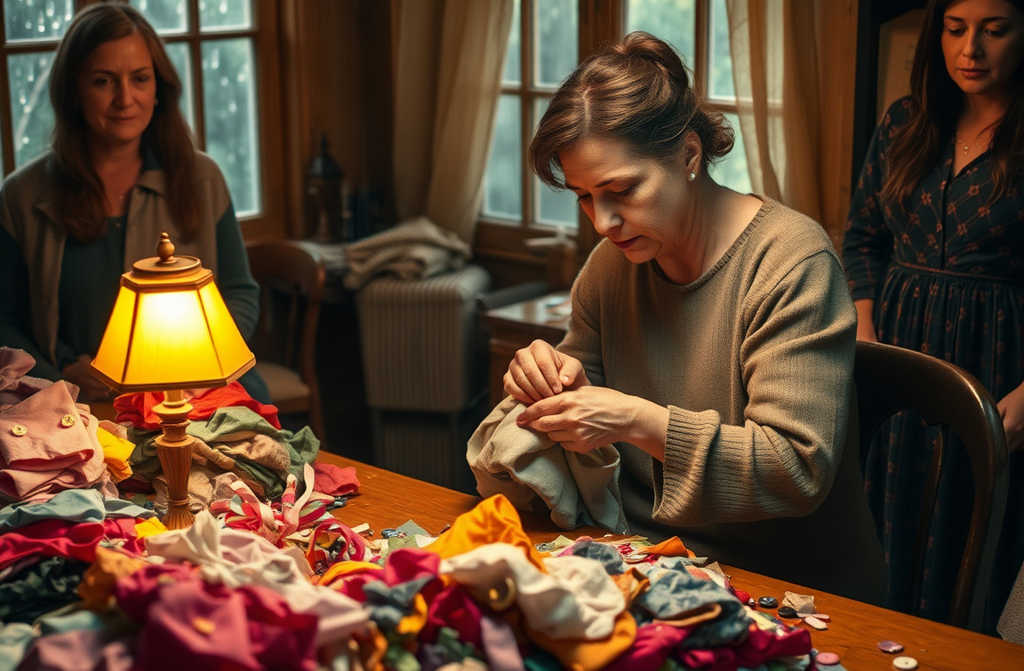
Emily said nothing. With a single motion, she parted the edges of the sack and turned it over. Out tumbled clothestiny, vibrant, carefully stitched, each one unique. Dresses pieced from silk and cotton scraps, trousers of thick wool, striped blouses sewn with uneven lines. All made from what others had tossed aside without a second thought.
Margaret covered her mouth. Louise took a step back. The only sounds were the ticking of the clock and the soft patter of rain against the window.
Emily lifted her gaze.
You must wonder why Ive collected all this, she said quietly. Because nothing in life should be wasted. Every scrap can mean somethingif someone chooses to give it purpose.
She bent down and picked up a little yellow dress, stitched from three different fabrics. Along the hem, tiny white and blue flowers were embroidered.
These clothes arent for me, she added softly. I make them for the children at the orphanage near the woods. Theyve nothing of their own. I wanted them to feeljust for a momentlike everyone else. Beautiful. Valued. Seen.
The workshop stayed silent. Louise swallowed hard.
That orphanage? The one by the old highway?
Emily nodded.
Yes. Every month, I leave a sack by the gate at night. I dont want them to know who brings them. It doesnt matter. All that matters is that they wake to something to wear.
Margaret wiped her tears with the back of her hand. No one laughed now. In the corner, steam rose from the iron like quiet smoke.
Emily spoke on, as if to herself:
At first, I just wanted to make something. Something from nothing. But when I saw those childrenstanding by the fence, watching passersbyI realised it wasnt the fabric that mattered. It was the warmth in the hands that stitched it. I havent thrown away a single scrap since.
The women stepped closer. Louise touched a tiny wool coat with big buttons.
Its warm, she whispered. So small for a three-year-old?
For Lily, Emily smiled for the first time. Her hairs like wheat. When she laughs, the whole world seems brighter.
No one asked how she knew their names.
After that day, everything in the workshop changed. Margaret began setting aside fabric scraps for Emily, Louise brought ribbons and buttons. Even the elderly tailor from next door handed over a box of coloured thread. For your little princes and princesses, he said shyly.
Emily didnt speak much. She worked as alwaysquietly, precisely. But in the evenings, after the others left, shed light a lamp and sew. In the yellow glow, only her hands were visiblesteady, patient, sure.
In time, the workshop stopped being just a place of work. It became something elsea place where everyone learned that even scraps could be made beautiful. That kindness needed no grand speeches, only action.
One rainy Saturday, the women went together to the orphanage. For the first time, Emily wasnt alone. The children ran barefoot into the yard, smiling as they pulled the sacks from the car. When they saw the clothes, they clapped.
Margaret later said shed never seen joy so unguarded. Each child held their new clothes like treasure. A girl pulled a dress over her worn jumper and danced in the rain. A boy in an oversized coat laughed, declaring he now looked properly posh.
Emily stood at the back, silent. She only watched as small hands traced her stitches. Margaret noticed her wiping her eyes but said nothing. She understood.
When they returned to the workshop, tired and drenched but happy, someone had pinned a note above the mirror:
*From what others discard, a world can be built.*
No one claimed to have written it. But they all knew.
After that, bags of fabric began appearing at the workshopdonations from townsfolk. Students from the sewing school came to help. And every evening, in the window of the old building, a single lamp burnedcasting the shadow of a woman still stitching.
Years later, when the workshop moved to a new building, someone left a pencil scribble on the old wall:
*From scraps, hope can be sewn.*
And to this day, at the orphanage by the old road, children wear Emilys clothes. Some bear uneven stitches, the faint marks of hands that knew how to turn shame into dignity, silence into care, and scrapsinto love.
No one laughs at her sacks anymore.
Because now they all knowinside each one isnt just fabric, but a heart that can stitch the world anew.