
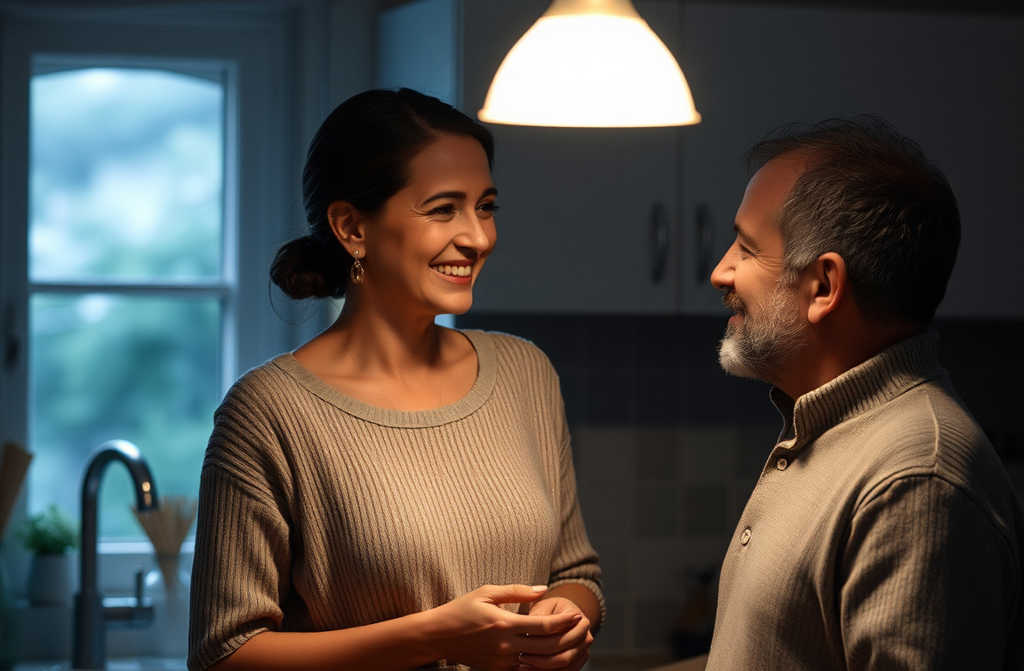
It was sixthirty when Natalies alarm went off, even though she could have slept in a bit longer. She set it not because she needed to, but because she feared missing the chance to get a proper start. While the house was still quiet, she managed to toss a load of laundry in, pack a container of buckwheat and chicken for her husband, check that her sons English workbook was signed, and skim through the inbox marked urgent. In the bathroom the mirror steamed up from the shower, and she could see herself in fragments: forehead, lashes, a mouth line that had grown a little tighter over the past few months.
Natalie worked as a project manager for a firm where everything was measured in deadlines and risk matrices. Every minute a new chat ping appeared, and her hand instinctively reached for the keyboard, even while she stood at the stove. She knew that if she didnt reply straight away, someone would assume she had checked out, and then shed have to prove she was still on the clock. She was always, inevitably, on the clock.
Her tenyearold son, Harry, woke up blearyeyed and irritable. Her husband, Simon, was up even earlier, heading off to the construction site and dropping Harry at school if Natalie lingered. Simon wasnt a bad bloke; he simply lived on mustdo mode, just like her, and when he collapsed onto the sofa in the evening his fatigue read like a law of nature. Natalie caught herself envying that simplicity: tired meant you could lie down. Her own tiredness always demanded an explanation.
One Monday she glanced at the calendar and realised she was fortyone. A birthday reminder had popped up by accident a reminder she herself had set years ago and then forgotten. She stared at the date, at the endless todo list, and dismissed the alert. On the tube she clung to the handrail, rehearsing the budget she had to approve, the order she needed to collect, the call she must make to her mother or else shed be that daughter. Colleagues sent her brief messages peppered with emojis, and Natalie replied thanks on autopilot.
Across town, at the primary school, Miss Evelyn Harpers first lesson began at eightfifteen. At fortyeight she taught literature, though lately she felt more like a dispatcher. Children chattered, parents buzzed her on messenger, the deputy head sent spreadsheets that had to be filled by evening. Evelyn carried notebooks in her bag, grading essays on the bus and in the kitchen while the kettle whistled.
Her universitygoing daughter, Blythe, lived on her own but called almost daily, usually ending the chat with requests: transfer some cash, check the train schedule, help with paperwork. Evelyn never mastered the art of saying not now. She feared that refusing would make her a bad mother, a bad teacher, a bad person. She kept other peoples expectations in her head like a rulebook you werent allowed to bend.
In the teachers lounge a plate of biscuits sat on the table for tea, someone had written. Evelyn grabbed one, then another, and felt irritation risenot at the biscuits but at herself. She heard colleagues brag about weekend getaways, about who managed to squeeze in a massage, and the word managed sounded like a thinlyveiled rebuke. She thought, if only I could be more organised, I could manage too, instead of being stretched thin by everyone elses asks.
At the local health centre, Dr. Margaret Clarke was already juggling a line of patients by nine oclock. At fiftytwo, she was a GP, her consulting room smelling of antiseptic and the faint rustle of old paper records. Patients arrived with coughs, high blood pressure, requests for work certificates. Margaret listened, prescribed, explained, and between appointments answered the nurses queries and checked that the computer hadnt frozen.
She rarely measured her own blood pressure, not because she didnt know the risk, but because she didnt want to see the numbers. When the day is full of everyone elses figures, yours feel like an unnecessary extra. At home she cared for her elderly father, who had had a stroke three years earlier. He could get to the kitchen on his own but mixed up his meds, so Margaret sorted pills into weekly blister packs as if that could bring order to everything else.
Claire, thirtyseven, was selfemployed as a nail technician working from a flatstudio in a new development. A mortgage, two noisy streetfacing windows, and a client list that vanished the moment she cancelled a booking. She posted immaculate nail photos on social media, captioned slots available, and answered messages at two in the morning.
Her boyfriend, Tom, lived with her but more as a guest. He helped occasionallypicked up parcels, took out the rubbishbut mostly believed Claire was her own boss, so she should handle everything herself. Claire didnt argue; she feared a spat would turn into a fullblown drama, then a breakup, then another point on her evergrowing checklist of problems. She already had enough.
What tied them together wasnt age or occupation, but the way they each shouldered life as if it might fall apart the moment they let go of a single thread. And the constant chorus of contradictory voices around them.
Natalie heard the office chatter about productivity and righthand balance. Social feeds showed women jogging, sipping kale smoothies, preaching selflove. She watched it with a tired, slightly angry smile; the grin felt like yet another duty.
Evelyn caught similar murmurs in the parents WhatsApp, where mums argued over afterschool clubs and tutors, and in the kitchen gossip that could both mock careerwomen and laugh at homemakers. Margaret heard the same in the waiting room, patients demanding attention while accusing doctors of doing nothing. Claire heard it in comment sections: How do you manage everything? followed instantly by You just sit at home, dont you?.
Natalies first warning sign struck on a Wednesday on the tube. She was clutching her phone, reading a bosss message: We need to close this today or well miss the deadline. The train screeched to a halt, and she felt a tight knot in her chest, as if someone had grabbed her heart. Air seemed to thin. She tried to inhale deeper, but the breath came short and sharp.
She thought she might collapse. She didnt want to fall. She felt embarrassed, as if collapse equated to weakness. She hopped off at the next stop, perched on a bench, hand pressed to her chest. The world buzzed around herpeople on calls, someone munching a scone. She stared at her knees, counting breaths.
She fished out a bottle of water, took a sip, and felt the pressure loosen a little, not dramatically, but slowly, as if her body were negotiating with her. Ten minutes later she managed to flag a taxi to the office. In the car she texted her boss: Ill be an hour late, not feeling well. Her fingers trembled; she imagined the shaking was obvious on the screen.
The boss replied: Okay. Hang in there. She read it and felt a strange emptiness. Hang in there was a familiar phrase, but now it sounded more like an order than comfort.
Evelyns warning came as a flareup. Friday evening, she was checking notebooks while the stew cooled, and Blythe called, pleading for cash for some fee. Evelyn tried to work out what fee, while also remembering the school cleanup shed promised to attend the next day.
A parents message pinged: Why did my son get a C? You must explain. A hot wave rose inside Evelyn. She snapped at Blythe, Hold on, I cant right now, and Blythe sounded hurt. Then Evelyn opened the parents message and sent a reply that was almost curt, bordering on rude. She hit send and instantly regretted it.
She stared at the screen, feeling shame cling to her throat. She wanted to rewind, delete, do it differently. The message was already gone. She switched off the phone, retreated to the bathroom, shut the door, and just stood there gripping the sink. In the mirror she saw red marks on her neck.
Margarets alarm bell was medical. On a Monday, after a morning of appointments, a pounding headache and nausea struck. A nurse said, Margaret, you look pale. She waved it off, but an hour later realised she couldnt simply brush it away.
She asked to have her blood pressure checked. The sphygmomanometer spiked. She looked at the numbers and thought not of herself, but of the packed day aheadher father would have no one to feed, patients would complain if she cancelled. Then she heard her own professional voice, dry as ever: I need a sick note. Asking for it felt harder than diagnosing a patient.
Claires crisis arrived as numbness in her fingers. Evening, she was finishing a clients polish when the tip of her thumb went dead. She smiled at the client, said Just a sec, and slipped into the bathroom, turning the cold tap on, holding her hand under the stream. The numbness lingered.
She finished the job, took the cash, saw the client out, closed the door, and sat on the hallway floor. The thought ran through her mind: if my hands give out, everything collapsesmortgage, supplies, food, bills. She Googled numb fingers manicure, reading about carpal tunnel, inflammation, surgery. Panic rose.
Tom arrived late with a grocery bag, saw Claire on the floor and asked, Whats wrong? She tried to explain, but words came out fragmented. Tom sat down, looked at her hands and said, Take a few days off. It was said plainly, without malice, but Claire heard it as a lack of understanding. A few days off meant lost income and angry clients.
These episodes werent catastrophes. No one died, no one lost a job in a single day. But each left them wobbling, knowing they couldt go on as before, yet unsure how to change.
That evening Natalie trudged home later than planned. Simon had already fed Harry; a cold plate of spaghetti sat on the table. She slipped off her coat, sat down, and said, I felt faint on the tube. Her voice trembled despite her attempt to stay steady.
Simon stared. Heart? he asked. Natalie shrugged. She wanted him to get that it wasnt just a heart thing. Simon replied, See a doctor tomorrow. Ill take Harry. His tone was practical, not pitiful, and that oddly helped.
The next day she booked an appointment through the NHS app. The only free slot was the following week, morning. She wanted to cancel because of a planning meeting, but remembered the tube incident and the fear of falling. She emailed her boss: Ill need to step out for an hour for a doctors appointment. She sent it and waited, halfexpecting to be summoned to the boardroom.
Her boss replied a minute later: Okay, let the team know. Natalie reread it and felt a small tension melt away. The world didnt become kinder, but shed allowed herself a tiny act without excuse.
Evelyn the next day marched to the deputy head. She clutched a printed screenshot of the angry parents message, palms slick. The deputy head, a stern yet tired woman, listened. Evelyn said, I lost my cool. Im embarrassed. Could we set a limit on when we must reply?
The deputy head exhaled. We cant do everything. Lets try a rule: answer by sevenp.m., anything after goes to the next day. Ill post it in the staff chat. Evelyn felt relief, then a sting of guilt, as if shed begged for a privilege.
She called Blythe and said, I can help, but not instantly. I need rest too. Blythe was silent, then asked, Mum, are you ill? Evelyn answered, No, just tired. Saying it out loud felt frightening; in her world fatigue was something to endure in silence.
Margaret got a weeklong fit note. She left the clinic clutching a sheet and a bag of medication, feeling the eyes of strangers on her as if she were faking it. At home her father asked, What are you doing here? She replied, Doctor said I need to rest. He muttered, Rest is for the young. She didnt argue.
She phoned a socialcare service, as shed been advised, and inquired about a parttime carer. They explained the paperwork, the waiting list, the forms. Margaret noted everything on a scrap of paper, feeling the familiar irritation of bureaucracy. Still, she pushed forward, because otherwise her blood pressure would become a number on a chart, not a warning.
Claire rescheduled two clients to the evening, one to the next day. It felt like a disaster in her mind. She messaged a few regulars: Need to lighten the schedule for health reasons. Some replied with understanding, others with a curt OK. One client asked, Are you ill? Claire stared at the message, then let it sit.
She found an orthopaedic specialist online and booked a private appointment, using savings earmarked for a holiday that never materialised. The doctor talked about hand overload, the need for breaks, exercises, a wrist splint. The word necessity sounded like a threat.
At home she told Tom, I need you to take on some chores. I cant carry this alone. Tom was initially hurt. Youre home, arent you? he said. Claire looked at him and, for the first time, didnt smooth it over: Im working from home. Its a job. If I collapse, we both lose income. Tom fell silent, then said, Alright, lets split it. It wasnt a romantic epiphany, just a negotiation where she didnt back down.
By midmonth each of them hit a point of no return.
Natalies came during a planning meeting when her boss offered another project, saying, You handle this better than anyone. She felt that familiar sting of pride mixed with dread, visualising herself back on the tube, breathless, muttering hang on to herself.
She said, I wont take it. Im at my limit. I can help hand over, but I wont lead. The room fell silent. A pen clicked. Her boss asked, Are you sure? She nodded. Inside she trembled, but it was a decision, not habit. He replied, Fine, well reallocate. No angry outburst, just irritation at extra work. Natalie realised the world hadnt collapsed, yet the spectre of colleagues labeling her a quitter lingered.
Evelyns breaking point was a confrontation with a furious parent who had stormed into the school after receiving her sharp reply. He shouted, demanded an apology, threatened a formal complaint. Evelyn said, Im happy to discuss the mark and the work, but I wont engage in that tone. If you wish, we can meet with the deputy head and keep it on record. The parent bristled, but the deputy head backed her. Evelyn left the office with shaky legs, a mixture of fear and, for the first time, a sliver of empowerment.
Margarets point arrived on the third day of her sick note when a colleague begged her to pop into the clinic for an hour to finish a report. She walked to the bus stop, felt her blood pressure rise again, and realised she was lying to herself.
She called the colleague, I cant, Im on sick leave. The colleague sighed, Alright. Margaret finally sat down, watched her father fumble with a teacup, and felt both guilt and an unexpected relief.
Claires crisis sparked when a demanding client insisted on an immediate appointment, threatening to go elsewhere. Claire typed, I cant today, next availability is Thursday. The client snapped, That doesnt work for me. Claire felt her chest tighten, but she didnt apologise. She turned off her phone, made a simple dinner, ate without scrolling. The warm food steadied her.
After those moments, small but firm changes took root.
Natalie told Simon later that evening, I turned down the project. He raised an eyebrow. And? he asked. She expected criticism, but he simply said, Good. Youre not a robot. It felt like a small weight lifted. She went to Harrys room, sat while he packed his bag, and for the first time didnt let the flood of emails distract her.
Evelyn switched off notifications after seven. The first days she still reached for her phone like a hot kettle, fearing some catastrophe if she didnt reply. Nothing catastrophic happened. She still saw dozens of messages at breakfast, but now she had a rule to lean on.
She left school with a single stack of workbooks instead of a mountain, storing the rest in the cupboarda minor rebellion. At home she allowed herself ten minutes on the sofa, watching the garden, doing nothing. That nothing felt odd, but soothing.
Margaret spent herShe finally realized that caring for herself was not a selfish luxury, but the most practical way to keep all the other pieces of her life from falling apart.





