
Victory Without Love
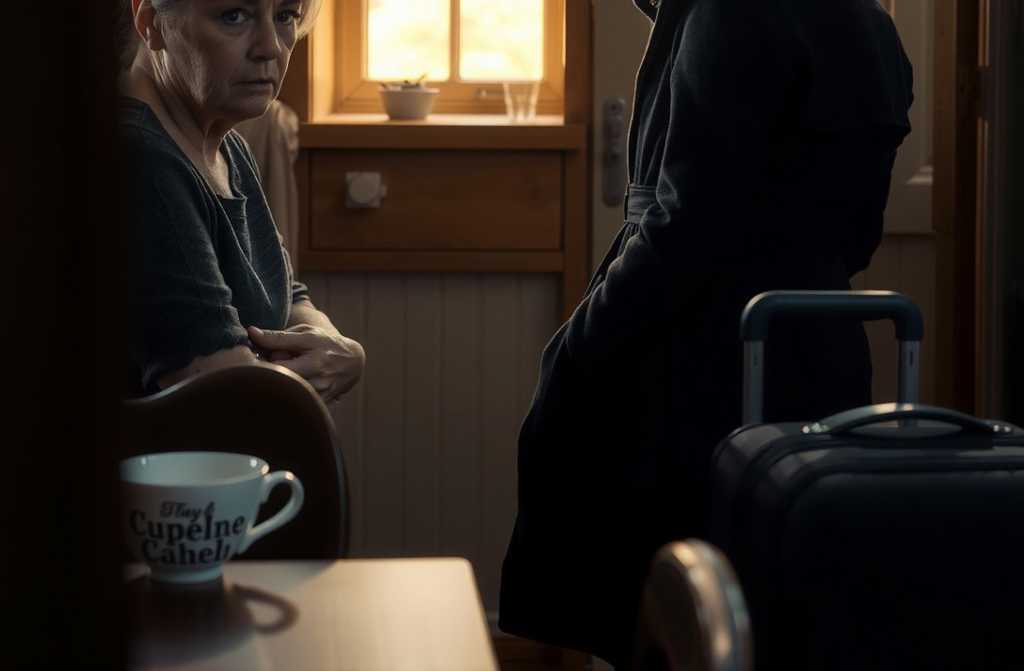
Well, thats it then, Simon, I said, setting my teacup down on the saucer with a faint clink I thought rather ceremonial. We can carry on now.
Mum, you say it as if youve won a chess championship.
Havent I?
My son looked out the window. March outside, wet and murky as an old dishcloth. I followed his gaze but found nothing particularly interesting.
Simon, I asked: havent I?
Mum, she just left. With a single suitcase. Hardly cause for celebration.
Its worth celebrating that shes gone. With only a suitcase. Came with nothing, left with nothing. Thats fair, isnt it?
He finally turned back to me. I expected to see something in his eyesresentment, anger, weariness at the very least. Instead, there was something unreadable. Something I chose not to look at too closely.
Alice put quite a bit into this flat, he said quietly. Her own money, too.
The flats in my name. I gave it to you, Simon. Not her.
I know whose name is on the deeds.
So whats the problem, then?
He stood up, grabbed his coat from the hook. I noticed he hadn’t finished the apple crumble Id baked that morning for the occasion. Half of it still untouched.
Im off, he said.
Where to?
Just out.
The front door closed quietly. Not a slam. Never a slam. As if hed spent his whole life avoiding making any noiseno doors banging, no cups smashed, nothing. I looked at the leftover crumble, then picked up a fork and finished his slice myself. The apples were tart, but the right kind. Home-grown.
I sat in the kitchen of my flat, where Id lived for thirty-seven years, and told myself everything would be fine now.
I was sixty-two. Im a small, tidy woman with grey hair always pinned neatly at the nape of my neck. My pension was good for a town like Norwich. Forty years as an accountant had taught me to respect numbers and to keep a careful count. So, five years ago, when my son brought Alice home, I saw right through her from the start.
Alice was from a tiny village three hours away, had moved to study, then stayed to work, rented a room at the companys digs. Simple, reserved, with a plait down her back and a habit of averting her eyes when she spoke. I could read people. I read Alice at that first dinnershe was after the flat.
Simon disagreed. Simon said he loved her. Though Simon never said much, and what little he did offer I filtered through my own sense of things, always coming up with the right answerthe one that matched my own.
For three years, they lived in the flat Id given Simon as a present on his twenty-eighth. My solicitoran old friendhad advised: if theres a divorce, it wont be divided, since Simon hadnt bought it as a couple. I hadnt thought about divorce then, just carefulness. I always believed in carefulness.
Alice hung new curtains. I thought it presumptuous. Alice swapped out the crockery for something more modern. I preferred the old set. Twice a week, Alice cooked dinners and invited me round. I went, ate, thanked her politely, and left with an uncomfortable feeling I couldnt quite name.
Later, Alice redid the kitchen with her own money, pointedly, mentioned in passing only to Simon, not me. I found out when it was all finishednew striped wallpaper, white cabinets. I pursed my lips.
Dont you like it, Mrs. Turner? she asked, always direct. I never liked that.
Its nice, dear, I replied, in that tone that turns nice into awful. We both knew what was meant. But Alice didnt argue. She never rowed when I expected a scene to justify my righteous irritation.
Four years in, the marriage unravelled. Reasons abounded, none quite the reason. All true, none singular. Simon retreated into himself. Alice talked and pleaded. He nodded and fled to the telly. Simon would call me every other day, sharing how grim things were. I knew then: it was time. I told him so. I could be direct when it served me.
Simon, you cant live like this. Neither of you.
Maybe itll sort itself out.
It wont. Itll just grow worse.
Then came the solicitor, the endless forms, the silent meeting in the kitchen, the crumble, and March outside. Alice left with one grey suitcase. I watched her from the window: she stepped into a cab, never turning back.
I thought: there goes the loser. It felt freeing, like finally breaking a fever after a long illness.
My son, Simon Turner, was thirty-four, worked as an engineer at a construction firm, earned solid money, never brought up finances. I was proud of hima pride built of love, but also a sort of possessiveness and something else I hadnt words for. Id raised him alone after his father left when Simon was eight. Since then it had just been us, and it felt right.
When Simon was nineteen, I realised he could be alonethough, not in a good way. He didnt know how to fight for what was his, or to demand, or to be angry out loud. Hed retreat into silence. I called it good manners and comforted myself.
After the divorce, he lived alone for a month. Then he calledhed met Helen.
Where did you meet?
Work do.
Who is she, then?
Nice woman. Will you meet her?
We met at a cafénot at home. The first sign, though I didnt see it at the time. Helen was seven years younger than Simontwenty-seven, working in advertising, smartly dressed, absolutely certain what she wanted from the waiter, the menu, and by the look of it, life.
Mrs. Turner, she greeted me across the table, with the confidence of one doing the inviting rather than the invited. Ive heard a lot about you.
From Simon?
From Simon.
Hope it was all good, I replied, wearing my best smile.
All sorts, she said, simply, flipping open the menu.
I felt a strange sharpness under my ribs, but put it down to the draught by the door.
Helen was attractive. Not quietly so, like Alice, but openly, and she knew itdark hair, brown eyes, lipstick always perfect. She could say nothing, too, but her silence felt like judgment where Alices felt like patience.
They married four months later. I found out by phoneWednesday, after the news.
We got married today, Simon said.
Today?
Yes. Mum, dont be upset. We just wanted it simple.
Im not upset, I said. Congratulations.
I put down the phone, sat silently for ten minutes. Then watered the plants on the sill, and went to bed. Everything appeared normal in the morning.
Helen moved into the flat a week later. She arrived with a surprising number of belongings despite her compact frame. Boxes filled the hall. The next day, I noticed Alices curtains were out, replaced with heavy, dark green ones that made the lounge look like a study.
Helen, whatever happened to the old curtains?
Bin, she called from the kitchen.
But they were nearly new.
Not to my taste, Mrs Turner.
With a reply like that, there was nothing left to add. For the first time, I truly fell silent, no interior monologue about having the last word.
In those first few months, I visited often enough. Helen never turned me out, but cultivated the sort of atmosphere that left me keen to leavenot impolite, but distant. She didnt leave the room when I arrived, but never made a brew, closed the laptop, nor showed any real interest. I began to feel like a guest in a flat Id once called my own.
It was a new, unpleasant sensation.
Simon got even quieter in my presencepouring tea, offering me biscuits, nodding at my stories, always half-looking toward Helen with a careful watchfulness I recognised but wouldnt name. The right word was fear, but I never uttered it.
In October, Helen had the locks changed. Just like that. Simon called me to let me know:
Mum, weve had the locks changed. If youre coming round, let me know and Ill have to let you in.
Why?
Helen says its safer this way.
Safer from whom?
Pause. An awkward silence that said more than any answer.
Mum, its just what people do, he managed in the end.
That key had been on my ring for twenty yearsas owner, then as mum, always welcome. I took it off that evening, tucked it in my dresser drawer. Its still there now.
Christmas dinner was always held at mine. Always. Twenty years. Id make the salads and the fish, put the tree in the corner like my mum had done. Tradition.
In November, Helen told Simon, who told me:
We’re spending Christmas at Helens parents. In London.
London?
Yes. All her lot are there.
And me?
Mum, you know you cant be in two places.
That year, I spent Christmas alone. Set the table for one, opened the champagne at half eleven, watched the Queens speech, washed up and put myself to bed straight after midnight.
I called him in the morning. He didnt pick up until the third ring, sounding sleepy but content.
Merry Christmas, Mum.
And to you, Simon. How are you both?
Good, it was fun. Ill ring you later, OK? Helens still asleep.
Of course, of course.
Of course, I said, with a finality only mothers understand. But hed already hung up.
In February, Helen came to mine herselffor the first time ever. Noon, in heels and done up to the nines. It caught me off guard.
Come in, I said at last. Tea?
Love one.
We sat in my kitchen. She looked around not with self-consciousness but like a surveyor planning a redesign. I put the cups down, sliced some lemon.
Mrs Turner, I want to be blunt.
Go on.
Simon calls you every day.
Hes my son.
I know. But daily, for an hour, disrupts our evenings, our plans together. I think it could be less often.
I poured out the tea, hands steady. I watched for that.
Helen, I said carefully, Simon is a grown man. He decides when and who to call.
Of course. But a grown man puts his new family first.
Im his family too.
Youre his mother. Thats different.
We stared quietly at each other over our tea. Helen didnt drop her gaze. Had it been Alice, she would have.
I understand, I said.
Good, she replied, as though wed just agreed on the forecast.
After she left, I stood at the window for ages. The snow was melting at the kerb, a grey puddle reflecting the leaden sky. My mind drifted to Alice. Alice would never have called round like that. She sometimes said the wrong thing, but never with that cold, direct wind-through-the-door feeling.
I pushed the thought away, weighed it down with something heavy.
Simon called less often then, at first every other day, then once every three. I noticed, but said nothing. I called less, tooeach call felt rushed, Simon distracted, saying, Mum, weve guests, or, Were just heading out, with Helens brisk voice always somewhere nearby.
Helen earned well in advertising, Simon said, a note in his voice unlike Id heard before, perhaps closer to dependency than admiration. Helen brought in new gadgets, clothes, and took work trips to other cities. She was always busy, and her energy moved round Simon, leaving little air for much else.
That spring, I came round unannounced. Simon opened the door, and from his face I understood before he spoke.
Mum, you know you ought to call first.
I was passing by. Dropped in.
Passing?
I live ten minutes away, Simon.
Helens working today. At home. She cant be disturbed.
I didnt come for Helen. I came for you.
He let me in. We sat in the kitchen. Helen didnt come out once. After half an hour, I left. On the way out I realised Id never come unannounced againnot because Simon asked, but because I didnt want to see that look on his face at the door.
Summer passed quietly. I tended the allotment, grew tomatoes and cucumbers, took the neighbours grandchildren on seaside trips. No grandchildren of my own. Helen always said it wasnt time yet, too much going on at work. I didnt argue. You cant force what you cant change.
A chance encounter happened in September, though there cant be many real coincidences in a town the size of Norwich.
On my way home from the shops, carrying heavy bags, I suddenly saw Alice. She was standing at the entrance to an office, talking into her phone, short hair now to her shoulders, plait gone, in a navy coat Id not seen before. She laugheda real, easy laugh. Not the soft, anxious one I recalled.
I stopped in my tracks, did nothing.
Alice spotted me herself, finished her call, and walked over.
Mrs Turner.
Alice, I replied, surprised at my own gentleness.
You look well, she said, though thats what you say when someone doesnt but you want to be kind. I knew; Id said it myself often enough.
You look well too, I replied. And it was true.
Something had changedher stance, her gaze, the way she held herself. No trace of that uncertainty.
Do you work here? I nodded towards the office.
I run the place, she said. Set up my own business six months ago. Interior design.
Your own business?
Yes.
How did you manage? I blurted, instantly wishing I hadnt.
Perhaps Alice minded. Or perhaps she hid it well. I never worked it out.
I had two jobs for three yearsdaytime at the design firm, evenings taking private work. Saved up. Bought a flat last year. Small, but it’s mine.
My shopping bags weighed heavier as she spoke.
You bought a flat?
Studio on London Road. Suits me.
You live alone?
Alone. I like it.
We paused a moment, city traffic rolling by, children laughing round the corner.
Alice, I began, not sure what would follow. Id not prepared for this. It had simply happened.
Mrs Turner, she cut in gently, Ive got a meeting soon.
Of course.
All the best to you.
And you.
She walked away, only glancing back briefly. Not angry, not bitter. Just calm, as if all the decisions were long settled and she was done with them.
At home, I unpacked the groceries, washed my hands, made soup, cleared up, and sat by the window.
She bought her own flat. On London Road, a studio. Her own business. Not all at once; gradually.
I sat there thinking: Id won. The flat stayed. So did my son. Alice left with nothing.
But now my son called just once a week. Or sometimes after ten days. And Christmas would again be with Helens family in London, as Helen had already decreed.
Alice had her studio flat on London Road.
I went to my room, laid on the sofa and closed my eyes. Not asleep, just lying there. The dusk came early, and I didnt rise to turn on the light.
In October, Helen said she wanted to move: London was where her future was, the job offer there too good to pass up, career development she couldnt waste.
Simon called on Sunday after lunch.
Mum, we need to talk.
Go on.
We might be moving to London.
When?
Not sure. Discussing it. Thought Id tell you first.
Thanks for letting me know.
Mum, dont be likewell, so cold.
Cold?
You sound cold.
Im just listening, Simon.
He was silent for a while.
We could rent out the flat, you know. Bring in some money while were away. You could keep an eye on the tenants, youre nearby.
I knew what keep an eye on meant: go to the flat Id been slowly excluded from, to take care of strangers now living there, where I had no key.
Ill think about it, I said.
Dont be upset, Mum. Londons only a couple of hours on the train. Well visit.
Of course.
Of course, again meaning never. But he didnt notice.
November was colder than usual. I pulled my coat out early. At the market for winter supplies, I ran into my old friend Susan from work. We lingered at the café by the fish stall with paper cups of tea.
Susan talked about her grandchildren, the garden, her husbanddoctors orders for a spa. She finished, then asked:
And how are you? Hows Simon? Does the new missus fit in?
Settled in well enough, I replied. Theyre moving to London soon.
Oh. And are you going, too?
No.
Susan shook her head, one of those people who says more in silence than in words.
Dont you regret it?
Regret what?
Alice. She was a quiet soul.
Quiet, yes. But wanted my sons flat.
Do you still believe that?
I set down my tea.
I saw her last week.
And?
Shes bought her own flat. Started her own business. Doing well.
Susan looked at me for a long timewithout judgment, without pity. I couldnt bear her gaze.
So, she wasnt after your flat, Susan said softly.
Susan, please.
Just saying.
You dont know what it was like, how she behaved.
Maybe not. I only see you doing your shopping in November, alone. And Simon off to London.
I walked home rather than take the bus. I needed to walk. Movement gave the illusion of going somewhere.
December brought the first snow. I put up the Christmas tree alone, strung the lights, hung the decorations. It looked lovely as ever.
Simon rang on the 23rdtheyd visit on the 31st.
Not for long, he warned. Just the morning, then were off to Helens folks.
Right, I replied.
Mum, come on.
Im glad youre coming. Ill bake a crumble.
They arrived at eleven. Helen in a smart coat, loaded down with a bag containing champagne and chocolates. She set it down without ceremony. Simon gave me a peck on the cheek. We had tea. Helen checked her phone most of the timebusiness, apparently.
Helen, will you have some crumble?
No, thanks. I dont eat pastry.
Simon?
Of course, Mum.
He ate a slice, then another. I felt suddenly that this would be one of the last times Id have him in my kitchen, with the move to London, with Helen, because life doesnt always go where you steer it.
At half twelve, they left. At the door, Helen paused, looked at me with a long, appraising glance. Im not sure what it meant. Maybe nothing. Perhaps everything.
Mrs Turner, she said. Youre a good hostess. Lovely crumble.
Thank you.
Helen nodded and went out. Simon kissed my cheek.
Cheers, Mum.
Bye, son.
I cleared up, wrapped the leftover crumble, washed the cups, and put on the telly. Didnt really watch.
I saw in the New Year alone. Opened the champagne at midnight, clinked it against the glass of the telly, drank, looked at the tree. The lights glowed quietly, for no reason at all.
In January, Simon said theyd move in March, and the flat would stay unused for nowsometimes theyd visit. I nodded, as if he could see.
February is a blur. I kept to my routines: shopping, telly, an occasional chat with Susan. I got my hair trimmed, though my bun remained in place at the nape. Helped the neighbour clear her shed one weekend.
Early March, when the snow was still clinging on, I rang Alice.
I remembered her number. Figures always stick for accountants.
It rang and rang. I almost hung up, then:
Hello.
Alice, its Mrs Turner.
A pausenot hostile, just a pause.
Evening, Mrs Turner.
I was wondering could we meet?
Another pause. I stood at my window, watching March thaw outside.
Why? Alice asked, not cruelly, but simply. Shed always asked directly.
To talk. Theres something I need to say. In person.
A long pause. So long I expected a refusal, which would have been only fair.
Alright, she said at last. Saturday, Im free. That café on London Road, you remember it?
Ill find it.
Twelve, then.
Twelve, I repeated. Thank you, Alice.
Okay, she said. Nothing more.
Saturday, I arrived fifteen minutes early, chose a window seat, ordered tea, and watched the thawing street. Felt like spring might really comepeople without hats, time moving faster than it seemed.
Alice appeared at exactly twelve, in her navy coat, short hair slightly curled in the damp air. She nodded, sat down, took off her coat, draped it over her chair.
Hello.
Hello, Alice. Thank you for meeting me.
What did you want to say?
I took up my cup, set it down again.
I wanted to say I was wrong, I said. About quite a lot. Not everything. But most things.
She looked at me steadily.
I judged you badly. From the off. Before youd even done anything. That was unfair.
She said nothing.
I thought you just wanted the flat. That you didnt love Simon, only used him. That you planned it all.
Do you still think that?
No, I replied, carefully, the words coming like an admission. No. I saw you in September. On London Road. You were laughing on the phone. I realised then youd just been another person wanting a home, a family. Like anyone.
Alice looked away, out the window. A pigeon waded in a puddle.
Mrs Turner, she said softly. Its good youre saying this, truly. But I dont know what Im meant to do with it.
You dont have to do anything.
Then why?
Because I needed to say it. Maybe not for you. For me.
She watched me. No pity, no triumph. Something else for which I had no name.
Hows Simon? she asked.
Theyre moving to London. Helens working there now.
I see.
Shes different from you. Not better, not worse. Just different.
Alice gave the faintest smile. Not mocking. Just a smile.
Do you want anything from me? I mean, is there anything I can do, help with?
No, nothing. I just wanted to say my piece.
All right, she said. Then Ill be off. Ive got a client meeting at two.
Of course, dont let me keep you.
Alice reached for her purse.
Ill get this, I said.
No need.
Please, Alice.
She regarded me, then tucked her purse away.
Alright.
She stood, donned her coat, checked her bag.
Mrs Turner, she said. It doesn’t hurt me any more. Hasnt for a long time. I want you to know that.
Im glad.
Not for your sake. For mine. I want you to understand: I dont hold a grudge. Not because you were right, but because its better for me this way.
I nodded, lacking words. For the first time in a long time.
All the best to you, Alice said.
And to you, love.
She left. From the café window, I watched her stride evenly along the pavement in her blue coat, turn the corner, phone in hand.
I paid, put on my coat, and walked outside. The air smelt of thawing snowa scent Ive known since childhood. March always smelt of possibilities. At least, it did when I was a girl.
I walked along London Road, thinking about what Id done the day Alice left with her one grey suitcase. Id stood at the window, watching. Believed Id won.
But Alice didnt hurry, didnt look back. Back then, I saw that as the dignity of the defeated, as if it could change nothing.
Back home, I let myself in. The silence was as familiar and settled as the flat itself. My silence.
I hung up my coat. Went to the kitchen. Put on the kettle.
Out the window, March kept thawing. The snowdrift by the steps was finally nearly meltedan old broom sticking out now, left behind last autumn. I stared at that broom, thoughts quiet and wordless.
The kettle boiled. I poured hot water into my cup, clutched it in both hands, warmth seeping through the pottery.
There it isvictory. The flat is mine. My sons off to London. Daughter-in-law changed the locks, took the family rituals away in her suitcases. The first daughter-in-law left with nothing, now lives in her own studio, runs her own business, laughs in the street.
I am not a foolish woman. Careful, shrewd, observantfour decades counting money teach you to see the balance.
The balance is this: I am alone in my kitchen, tea in hand.
Not for want of anyone to calltheres Susan, the neighbour, my son, far off in London. Alone because the silence is the normal now, because I cant remember when someone last popped round just because.
Alice used to pop round for no reason, bringing pastries from that bakery by the marketgone these past two years. Never asked, just brought them in. Mrs Turner, these have cabbage, you like that. Id eat, thinking only of motives.
I drank my tea, rinsed my cup, dried my hands on the old tea towel with cockerels I bought at a summer fair five years ago.
Then I rang my son. Not with anything to sayjust because.
Mum? Everything alright?
Im fine, Simon. How are you?
All right. Packing. Loads to do. You?
Im well. Just wanted to call.
Ah, okay. Well, Mum, Im up to my eyes here, can I ring later?
Of course, love. Carry on.
You sure everythings alright?
Im sure, Simon.
Good, then. Bye for now.
Bye.
I put the phone down. Out the window: March. The snowdrift broom. The hush.
I moved to the sofa, opened an old photo album from the drawer. Flicked to a page at random.
Simon at about eight on the allotment, holding up a fishing hook, looking solemn at the camera. Next to him, meyoung, laughing. Back when I knew how to laugh properly, before I forgot how. When, I couldnt say.
Next page, Simon grown, twenty-eight, by Alices side. Both glancing off camera, her hand in his. Id taken the photo, thinking: shes holding him tight, so he wont leave.
Now I look and just see two people, together, holding handsnot tightly, just together.
I close the album, put it back.
Evenings drawing on; I dont get up to switch on the lamp. I sit and listen to the quiet.
Alice said: it doesnt hurt anymore. I dont hold a grudgenot because you were right, but because its better for me.
Thats the difference, I think. Alice did things for herself. Everything I did was for Simon. And the sum of it: he lives in London, and I sit alone with an album in the dark.
I didnt cry. Never been one for tears in solitude. Last time I really cried was when my husband left. Three days, then I took eight-year-old Simon to the cinema, and vowed not to shed another tear for that.
I stood up, switched on the light. Went to the kitchen, found the leftover crumble, cut myself a sliver.
Darkness outside now. The streetlamps orange made March look almost cosy. Almost.
I ate and watched the light, planning vaguely to ring Susan on Saturdayperhaps a trip out, to the park or a café if the weather played nice. Or just to sit together.
Then I thought of spring, the allotment needing sorting after winter. Six tiny plots, but the tomatoes always did wellneighbours wanting seedlings.
After that, I thought of nothing much. Just ate, just watched the warm orange glow.
The phone lay silent on the table. Simon didnt ring back. Forgotten, probablypacking, the usual. I looked at the phone and didnt pick it up. Not cross. Just didnt.
A neighbours cat shrieked through the wall, then fell silent. The radiator clanked. The everyday stuff.
I thought that tomorrow I might go to the market, see about some seedlings. Maybe. Or maybe it was too soon.
I washed up, turned off the kitchen light, went through to the living room.
I always read a little before bedat the moment, a detective story, the bookmark at halfway. I picked up where Id left off.
Read for twenty minutes, though I realised Id read one page three times and not retained a word.
Shut the book, set it down, switched off the light. Lay in the dark.
Alice walking down the pavement in the navy coat, unhurried.
Three years ago, walking away with her grey suitcase. Steady, unrushed. Id thought back then: lost with dignity.
Now, in the dark, I saw it differently. Maybe Alice already knew something I didntmaybe she wasnt tallying her losses, but thinking of where she was headed.
Looking ahead was never my talent. Always looked back: what Id kept, what Id defended, what Id won. The balance sheet.
And the present balance: the flats still mine. My sons still my son. Life rolls on.
But its quiet. Oh, so quiet.
I turned onto my side, closed my eyes.
Outside, March faded peacefully into night. The last snow shrinkingcome April, itd be gone. Spring always comes, whether youre ready or not.
I thought I might walk past Alices office on London Road one day. Not on purposejust if I happened that way. Just to see, to know all was still running. Of course it would be. Alice never left things unfinished.
She was always good at thatfinishing what she started. I never saw it then. Or called it by another name.
Still wide awake, I listened to the deep hush of my flatmine, always mine, for thirty-seven years.
The neighbours cat made another noise, then all was silent.
I lay in the dark, thinking, then not thinking, then thinking againabout the market tomorrow, calling Susan, about Simon moving in March and maybe visiting London. The trains no bother.
About how, if I saw Alice again on London Road, I might say something different next time. Not you too or of course. Something that matters.
Or maybe Id never see her. The citys small, but you never know.
My thoughts slowed, as slow as a tram rolling to its stop at dusk. Their quiet contained a sort of peace. Not good, not badjust whats left once everythings happened and you have to live with it.
And living with itI know how. Always have.
In the morning, Ill get up at seven, as ever. Brew my tea. Look out at the melting March.
And somewhere else in town, in her own London Road studio, Alice will do the samebefore or after me, boiling her own kettle for her own window-view.
Both of us will be looking at the same March. The same melting snow. The same pale sky growing lighter.
Just from different windows.
At last, I truly closed my eyes.
Outside, the quiet March night waited.





