
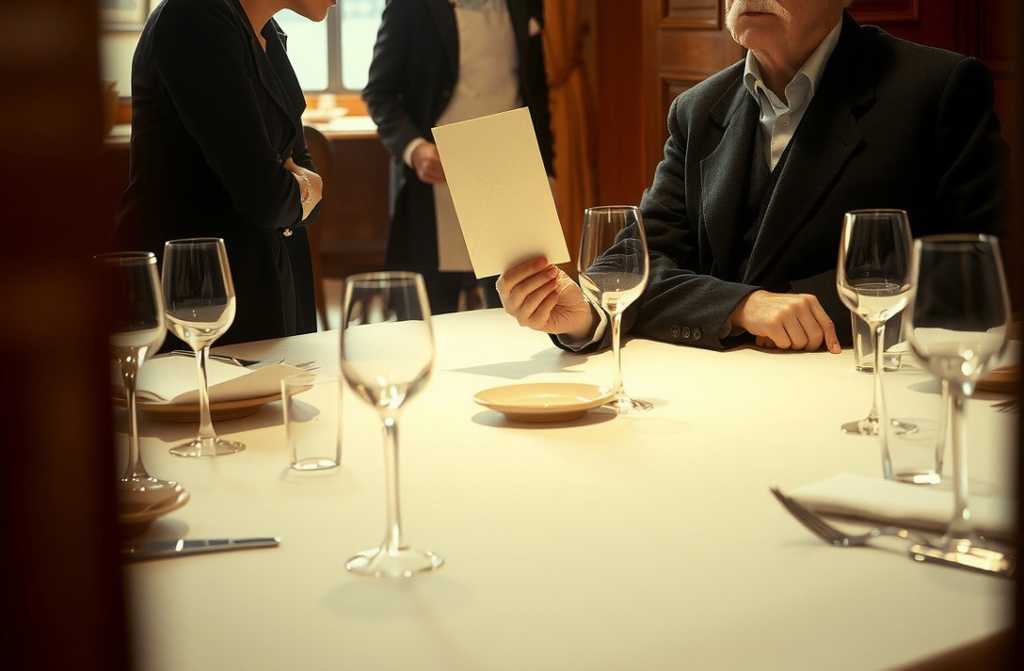
She kicked the old man out of the restaurant, never realising hed change her life forever just ten minutes later.
It was the perfect evening at The Tide Brasserie.
Crystal glasses caught the warm golden light, and the violinist by the river-view windows played something achingly lovely. The waiters glided about almost unseen, and the well-heeled diners spoke in gentle, private tonesthe way people do who are used to fine places and finer secrets.
At the very centre table sat Victoria Bennett.
Everyone knew who she was.
At thirty-six, Victoria fronted an exclusive beauty brand, was a fixture at charity galas, and always seemed to appear in all the glossy magazines. Perfect posture. Flawless make-up. Irresistible smile.
But tonight her smile was strained.
She was waiting for someone she hadnt seen in over twenty years.
Her father.
One day, long ago, he just vanished from her life. No letter. No phone call. No hint of return.
And then, that very morning, a simple message from an unknown number popped up:
I need to see you. Just once. Please.
At first, she nearly deleted it.
Then she wanted to refuse.
But something deep and wounded inside her made her reply.
Now, she sat by the window, clutching her wine glass so tightly her knuckles turned white.
Madam, would you like some more water? a waiter murmured.
No, Victoria answered coldly. Im waiting.
Just then, the restaurant doors opened.
An elderly man entered.
He wore a battered, dark coat much too thin for the chilly evening. His shoes were worn. His hair was almost entirely grey. Amidst all that opulence, he looked hopelessly out of placea man whod wandered in from the night by mistake.
Some diners twisted round to look.
Others frowned.
The manager took a step forward, but the old man stopped, glancing about nervously.
Then he spotted Victoria.
She knew it at once.
Even after two decades.
Even through all the lines and grey.
It was him.
Andrew Bennett.
Her father.
He walked to her table, slow and hesitant.
Victoria he said softly.
Her heart thudded, wild and trapped in her chest.
But her expression stayed icy.
Youre twenty years late, she said.
The old man flinched.
I know.
No. She cut him off, meeting his gaze. You dont know. If you did, you wouldnt have walked in here like its nothing.
Nearby tables pretended not to listen.
But, of course, everyone listened.
Please just five minutes, he begged. Just five.
Victoria leaned back as if considering a particularly unpleasant mark on the carpet.
You left my mother when she was dying.
Victoria
You left me when I was sixteen.
It wasnt like that
Oh really? Her voice grew sharper. Do tell. Were you tired of being a husband? Tired of being a father? Or did you just decide life would be easier with neither?
The old mans hands tightened.
I never wanted to leave either of you. Not for a minute.
She laughed, but it was harsh, brittle.
So why did you vanish?
He tried to reply.
But Victoria was already on her feet.
Tall. Immaculate. Cold.
No. You know what? Dont bother. I dont need explanations from a man who sacrificed me for himself years ago.
She waved impatiently for the manager.
Please remove this man. Hes disturbing the other diners.
Low murmurs rippled round the room.
The old man went pale.
Victoria, please
She looked at him with such contempt the nearby waiter had to avert his eyes.
Go, she said. And never speak my name again.
Awkwardly, the manager approached, touching the old mans elbow.
He stared at his daughter a moment longer.
Then, slowly, he reached into his coat and pulled out an old envelope.
He placed it on the table.
And said, just once:
At least read this when Im gone.
Victorias jaw quivered.
But she said nothing.
The old man turned, making his way out under the stares of dozens.
As the door swung shut behind him, an odd silence reigned.
Even the violin sounded softer.
Victoria sat down again, her chest rising and falling with shallow, strained breaths.
She stared at the envelope as though it might burn her.
One minute passed, then another.
Finally, she snatched it up and tore it open.
Inside: a letter.
And medical papers.
On the first page, in a hand that shook, just one line:
If youre reading this, I couldnt bring myself to tell you face-to-face.
Victoria frowned and kept reading.
That year, when your mother got ill, I was diagnosed with something else. It was a rare heavy metal poisoning from an accident at the factory where I worked. The company paid me to keep quiet. But there was more. Some families had already lost children. Your doctor told me clearly: if it got out too soon, thered be lawsuits, panic, backlash. You could have been in danger. I agreed to disappear, to give a statement to a closed inquiry. I was barred from contacting you. If I broke that, Id go to prison and lose my rights under the witness protection order. I thought I was saving you. I hated myself for it every day.
After that came a stack of official forms.
Signatures.
Stamps.
Dates.
The name of a major pharmaceutical group.
And, last pagea current diagnosis: late-stage lung cancer.
Victorias hands shook.
She read the last line twice.
Then again.
Her lips parted, but she couldnt breathe.
No.
No.
This couldnt be.
She shot to her feet so sharply her chair clattered to the tiled floor.
Where is he?! she demanded.
Every head turned.
The manager looked stunned.
Who, maam?
The man who just left! Where did he go?!
I Im not sure, maam, he went towards the embankment
But Victoria was gone.
She bolted out into the cold without her coat, handbag, or the dignity shed always treasured.
The sharp air bit her face.
She nearly slipped on the wet pavement in her heels.
Down the riverside, she ran, heart pounding, scanning desperately.
Dad! she calledfor the first time in twenty years.
Her voice broke.
Ahead, by a bench beneath a streetlamp, a familiar figure stood.
The old man turned.
She saw him clutch his chest with one hand, breathing hardeach breath an effort.
Dad! she cried, running to him.
He tried to smile.
A faint, apologetic smile.
You read it
And then his legs buckled.
She caught him before he hit the slick stones.
No, no, no she whispered, sinking down beside him. Please not now please
He gazed at her, pain fogging his eyes.
I never wanted you to find out this way, he said softly.
Tears streaked down her cheeks, smudging that flawless make-up.
Why didnt you tell me sooner?
Because you had the right to hate me, he rasped, just not the right to live in danger.
She closed her eyes, shaking her head.
Everything shed believed for twenty years crumbled right then.
All her pain.
All her anger.
Every scrap of contempt shed collected as proof she was right.
Turns out, shed hated the man whod destroyed his own life in an effort to save hers.
Call an ambulance! she shouted to the passers-by.
Someone was already dialling.
But all Victoria could hear was her own laboured breathing.
She cradled her fathers head on her lap, stroked his grey hair, and kept whisperingover and over, as if it could make it come true:
Im sorry Im sorry Im sorry
The old man lifted his hand with effort, brushing her cheek.
Youre just like your mother, he whispered.
For the first time in years, Victoria wept openlya broken, unguarded kind of weeping shed never allowed herself before.
It was true.
Three days later, the city buzzed with a new story.
Not Victoria Bennetts latest charity ball.
Not her new deal.
Not even the scandalous bit of restaurant footage someone had managed to catch.
But the press conference, where she stood in a plain black suit, no jewels, and told the truth about the accident that had been hushed up for years.
Her lawyers sat beside her.
And her father, frail and drawn, but alive, was next to her too.
Hed survived that night.
And, for the first time in twenty years, sat at his daughters side not as a ghost from the past, but as someone finally allowed to speak.
The investigation was re-opened.
That pharmaceutical group was charged with a cover-up.
Other families learned the truth too.
But for Victoria, something else mattered more.
Every evening, after he was discharged from hospital, she visited her dad.
Sometimes they just sat in silence.
Other times he told her stories from her childhood.
How shed been afraid of storms.
How she used to hide sweets under her pillow.
How shed once sworn shed grow up to be so strong no one could ever take away those she loved.
Victoria listened and cried.
Because she understood, finallytoo late:
He hadnt left her because he didnt love her.
Hed left her because he loved her so much, hed allowed himself to become the villain in her life.
Two months later, she shut down her beauty charity and started something new.
The Helen and Andrew Bennett Foundationfor families broken by corporate crime and witness protection.
At the launch, a journalist asked her, What was the most painful lesson?
Victoria looked calmly into the camera.
And in her eyes, for the first time, was something shed never shown before.
Truth.
Never judge a person whose story you dont know, she said. Sometimes a persons silence hides a love so vast, you could spend your whole life trying to be worthy of it.After the conference faded from the headlines, Victoria found herself sitting on the edge of her fathers hospital bed, sunlight trailing through the blinds in golden ribbons. Andrews breathing was thin, each inhale a fragile silk thread between then and now.
You know, he said quietly, eyes glinting with wry affection, I always dreamed of seeing you change the world. I just never thought itd be because of me.
Victoria smiledsmall, raw, real. She traced his hand with her thumb, memorizing every vein, every faded scar.
You taught me bravery, she whispered. Just not in the way I expected.
Andrew squeezed her hand, his grip gentle but steady. You taught me forgiveness. His voice trembled. And thats harder than any secret I ever kept.
A silence passed, warm, almost peaceful. She leaned forward, pressing her forehead to his.
When she finally left the hospital that afternoon, Victoria walked slowly by the river, the city rushing by in tides and currents she could never control. But in her chest, a new stillness had taken root.
That evening, she picked up the phoneher old friend from school, the cousin she hadnt spoken to in ages, her mothers sister. One by one, she began the halting work of piecing back her story, not hiding its broken seams.
And every day, she came home to the now-framed letter from her father, the ink shaky but the truth solid as bedrock.
The past had shattered her, but the future, rebuilt from truth and courage, was full of a light shed never dared to imagine.
She wasnt perfect. She was loved.
In the end, Victoria understoodthe lives we salvage from silence are often the most beautiful.
And those we forgive are sometimes the ones who teach us how to be free.





