
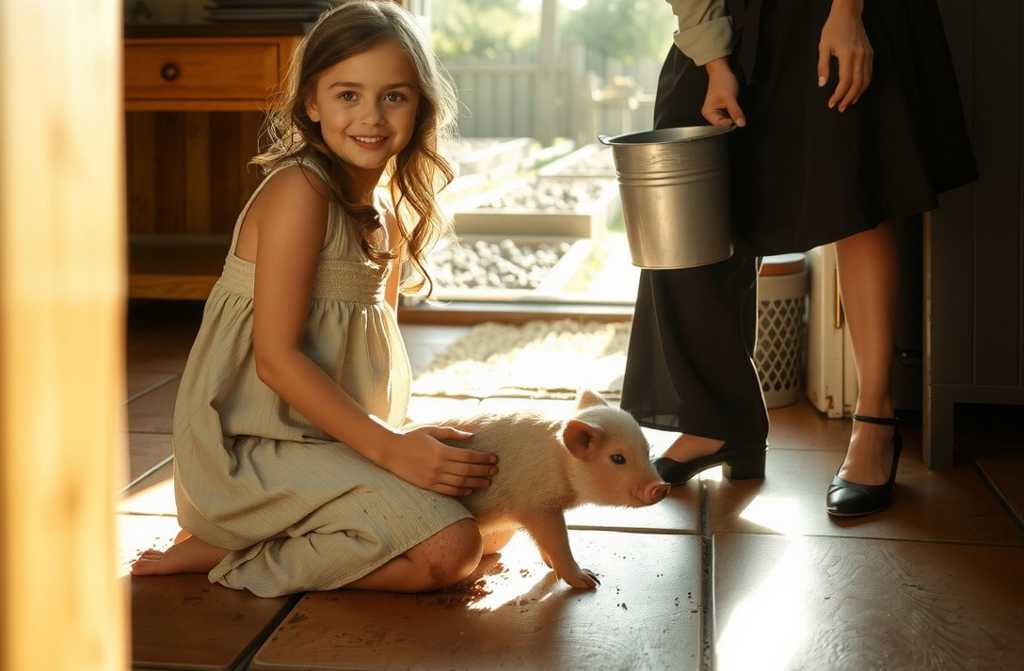
Barely had I turned eighteen when I toppled headlong into marriage”toppled” being just the word for something so sudden, bewildering not only those around me but myself as well. But what was done was done, and now life unfurled a brand-new chapter, a wild unfamiliarity that included, among other things, meeting the parents of my young husband, who himself looked every bit as lost as I felt. There we were: two fledglings thrown from the nest, wings flapping, nowhere near ready for the wind.
One morning, as my Aunt Edith fussed about, plying me with buttered toast, clotted cream, and gentle encouragements to eat up, love, our neighbour Mrs. Maplethorpe slipped through the back door. She watched the morning ritual in mournful silence, and then sighed, her words trembling with prophecy:
Youre much indulged, my girl, unacquainted with grievance. Mark my words, your mother-in-law will have your guts for garters.
Now, dont you go frightening the poor girl, Aunt Edith tutted, rattling the teaspoon in her cup.
And truly, grievance had never before knocked on my door. Our peculiar family, so unlike the ordinary, was an all-women household: my grandmother and her three daughters. My mother and Henrys belonged to the youngest, Jane; I was the darling of the eldest, Edith. Menwell, the war whisked them all away, so sisterhood and maternal overcare formed the fabric of the home, cuddling the children to bursting with affection.
As the youngest, I bore the full brunt of their spoiling. The old lady was rightId little notion of hurt. But the word mother-in-law rang outa barbed, foreign curse of a word, tinged with trouble. It scratched at my nerves, sticking in memory like a weed, promising unknown calamities, or so I thought.
In time, my mother-in-law materialisednot as a villain, but a tall, handsome figure with laughter in her eyes. Come in, dear heart, she said, all warmth, and led us to the garden: neat, raised beds already pulsing with green, and a robust piglet snorting at her approach.
Arthur, Arthur, time for breakfastyou clever boy, she murmured, and though she spoke to the pig, I felt oddly comforted, as if the praise belonged to me.
The garden, the pigthese struck chords of memory from childhood; all made sense. Back then, our piglets were always dubbed Arthur, and addressed with gentle affection. Everything here felt safe, even charming.
In the mornings, while our men trudged off to jobs at some great construction site, we remained to mind house and garden. But the spiteful term, mother-in-law, seemed to wedge a wall between us; calling her anything felt awkward, and soon, the need for an address became urgent. One day, as she complimented my name, I found myself talking of Tessa of Athens, and she laughed, suggesting, Why not call me Tessa, dear? Thats my name too. Problem solved, and so it was settled: Tessa she became, with her surname, of course, Mrs. Greenwood.
Life eased; the days fell into friendly rhythm. How quick she was, always a smile, always busythe bread sliced, tea poured, floors gleaming, vegetables weeded, Arthur the piglet fed, all before Id even risen.
The stories shed tell, grinning in the porch sunshine! How the war had left her with three rough lads; how shed hauled timber for the army; how the boys lost their ration books and, in a twist of benevolence, a shopkeeper had her sweeping the bakery, letting her collect crumbs for her sonsmy husband included, the little one, always frail.
Images cascaded in my mind, as if painted by moonlighther hardships became my own, her strengths vibrated through me. Everything was soothingly ordinary, until the morning trouble sidled in.
That day, Tessa woke me, saying, The ladies are off berry-picking in the woodsId like to go, too. Will you manage to feed Arthur? Ive left his breakfast in the bucket for you, all ready.
Of course, dont worry. Ill see to Arthur, I replied, bold as brass. But barely had she left when his shrill squeals wound up from the sty. Off I marched with his breakfast bucket, expecting simplicityopen door, slop feed, done. How wrong I was.
The instant I cracked open the sty, Arthur crashed through the door with brute determination, knocking the feed from my hands and bolting for the veg beds. The wild caught himhe dashed among the lettuces and runner beans, grunting, rolling, flattening fresh shoots in triumphant glee. Rooted to the spot, I watched in horror, paralysed. But disaster demanded action: I had to save the bedssave any hope of goodwill between Tessa and me.
Get him back in the sty, no matter what! With this mantra, I plunged after him, trampling the tidy rows. Arthur was tireless; once, twice I nearly seized him, hands slipping on his mud-caked flanks, but freedoms taste had made him slippery as an eel. A new plan was neededbrute force would not win him.
Scrambling to the house, I grabbed bread, coaxing him. The greedy little brute snatched pieces from my hands, and slowly, ever so slowly, followed me towards the sty. But just as we drew close, he darted away, more unruly than before; he trampled the bean-rows, upended the neatest tomato seedlingstruly, a disaster, complete with tears of misery from me.
Finally, when exhaustion made my limbs limp, Arthur slumped down, legs splayed, sighing piggy contentment; I knelt beside him and, desperate, began scratching his belly, as we had with pets at home. At last, his eyes fluttered shut, their pale lashes caked with soil, a picture of porcine bliss. I stroked and stroked, my dry throat burning for water, the sun relentless.
There, in the ruin of the garden, beast and girl lay, both filthy, both cornered by fate, one in rapture, one broken by despair.
Then the garden gate banged, and Tessa flew down the path. Oh, you little scoundrel! she laughed, grabbing Arthur by his back leg and, with a practised swing, flung him into the sty and slammed the door.
My legs had gone numbpins and needles stormed up them. Tessa helped me to my feet and off the shattered beds, then ran inside for water, coming back with a heavy pail drawn from the village pump. She sluiced the black soil from my legs, hands, face, her caring as gentle as falling rain.
Mud and tears washed away, and with them, it seemed, that monstrous, bristling wordmother-in-lawmelted into nothing. Out spilled, quite without meaning to, a cry: Oh, Mum! She broke into laughter, hugged me, and led me inside to taste her woodland berries.
Talk of the ruined garden was brief; she waved it off. Theyll grow again, loveits all games and nonsense. Tomatoes always bounce back, youll see. As for the pig, well, what can you expect?
She sent me to rest until the men returned, promising a proper English lunch. Where, in someone with such hardship, such patience and wisdom? Who had given her such endless kindness? I cannot say, but this much I know: strong, decent, truly loving sons dont appear by accident. They are made by great heartsby women like her, whose warmth quietly turns even the prickliest word, mother-in-law, into something gentle and unforgettable.





